Sue Finch is the author of two poetry collections: Magnifying Glass (2020), and Welcome to the Museum of a Life (2024) published by Black Eyes Publishing UK.
Vortex Over Wave, Sue’s coffee table book, was published in 2023 and features a selection of #ElasticBandPhotos and poems for the full moon.
Her first published poem appeared in A New Manchester Alphabet in 2015 whilst studying for her MA with Manchester Metropolitan University. Her work is now widely published by journals and presses, and she has recorded her work for iamb as well as being featured on the poetry podcasts Eat the Storms and A Thousand Shades of Green.
Her poetry explores personal experience, family, identity, trauma and relationships, often combining the confessional with fairy tales, dreams and dark humour.
Her work has been nominated for The Pushcart Prize and Best of the Net.
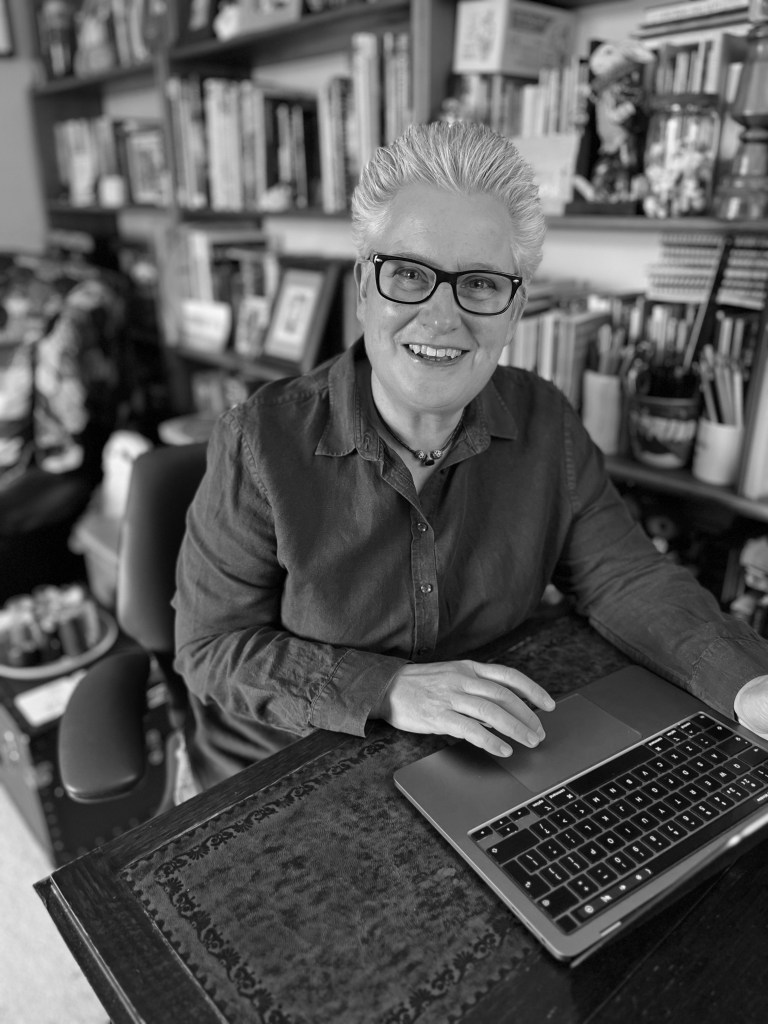
Sue lives with her wife in North Wales. She says: “I love setting words down on a page and I enjoy seeing where a line or a thought can take me. I have a writing desk in the corner of the lounge where there is room to tuck away into the quiet world of writing. My wife, Kath, is often invited to ‘Poetry Corner’ (a chair in our lounge) to be the first audience and critical listener for the drafts I am working on.”
What people say about Sue’s poetry:
“Sue Finch’s voice is both steady and questioning as she sets down the archive of her life museum and invites you to lean in for a closer look. Each exhibit feels like a very personal and off-kilter chronicle of a collective memory where wolves and silence stand with their backs to the corners of the theatrical space of a museum cabinet in which Smurfs and giraffes have walk-on parts.” Helen Ivory.
Sue’s poems “have the ability both to beguile and shock you with their humour, tenderness and darkness”. Georgi Gill.
“To read Suzanne is to be transported to other worlds, not just the gorgeous yet unsettling lands of the Hare Mother, the Red Shoes or a traumatised Rapunzel, but to worlds in which the everyday is transformed into the stuff of myth and legend.” Anna Saunders.

